 bobby
bobby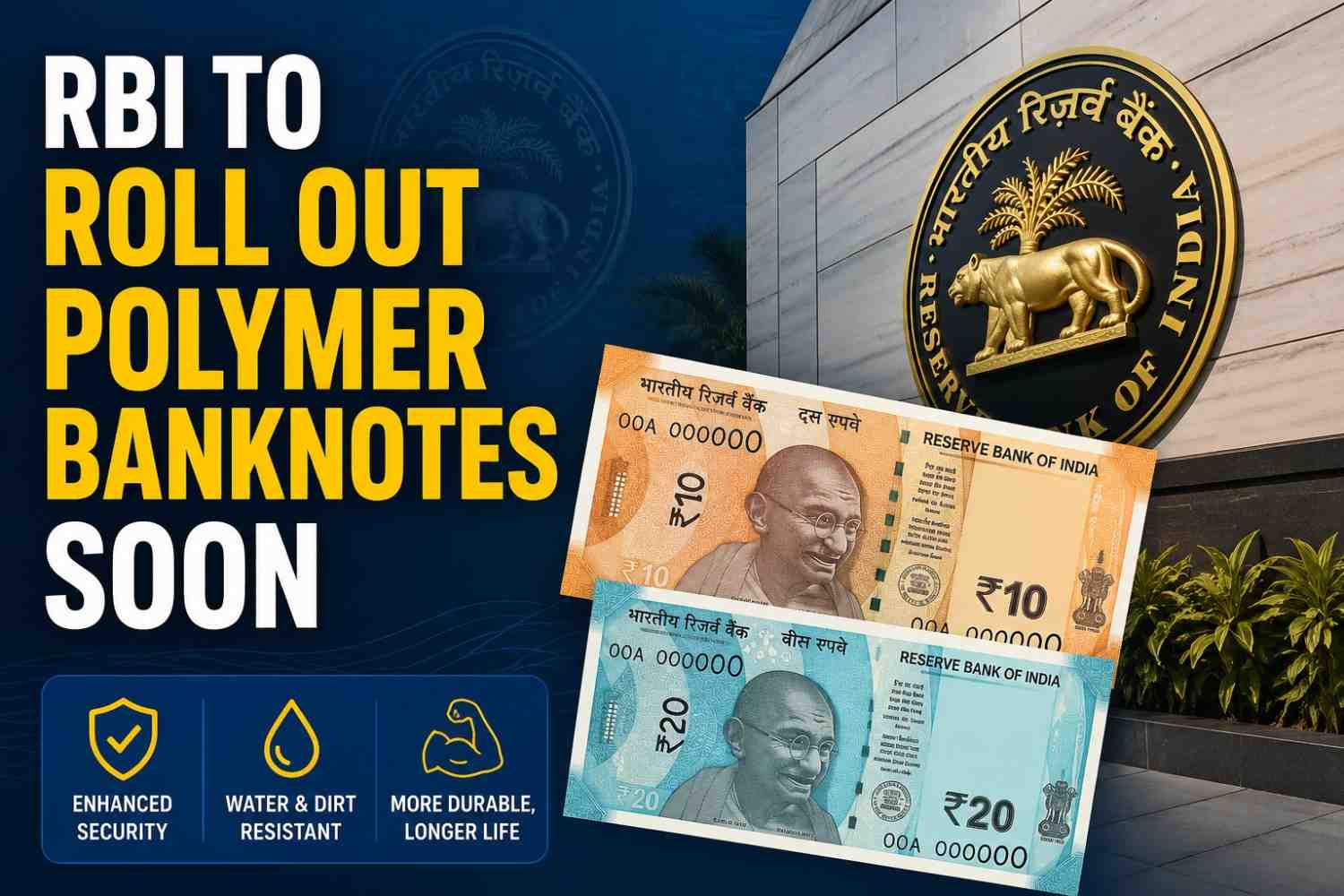
RBI to Roll Out Polymer: The Reserve Bank of India (RBI) is preparing to launch the first pilot rollout of polymer banknotes in India, marking a major step towards introducing a new generation of currency that is more durable, secure, and resistant to counterfeiting.
According to official sources, the pilot project will begin soon with ₹10 and ₹20 denomination notes. If the trial proves successful, the RBI is expected to gradually expand the initiative, with a nationwide rollout likely from 2027.
The move represents one of the biggest upgrades to India’s currency system in recent years.
💵 Which Polymer Notes Will Be Introduced First?
As part of the pilot phase, the RBI is expected to introduce:
- 💰 ₹10 Polymer Banknote
- 💰 ₹20 Polymer Banknote
These lower denominations have been selected because they circulate widely and experience heavy daily usage, making them ideal for testing the durability and performance of polymer currency under real-world conditions.
📅 Will Existing Paper Notes Be Discontinued?
No.
The RBI has clarified that polymer banknotes will not replace existing paper currency immediately.
Instead:
- ✅ Paper and polymer notes will circulate together.
- ✅ Existing currency notes will remain legal tender.
- ✅ Polymer notes will be introduced gradually in phases.
- ✅ Citizens will not need to exchange their current notes.
This phased approach will ensure a smooth transition without disrupting the country’s cash circulation.
📢 Why Is RBI Introducing Polymer Banknotes?
The RBI aims to improve the overall quality, lifespan, and security of Indian currency.
Key Benefits of Polymer Banknotes
🛡️ Better Security
Polymer notes support advanced anti-counterfeiting features that are extremely difficult to duplicate.
💪 Longer Lifespan
Unlike paper notes, polymer banknotes can last significantly longer, reducing replacement costs.
💧 Water and Dirt Resistant
Polymer currency is resistant to moisture, dirt, humidity, and everyday wear and tear.
🌱 Environment Friendly
Since polymer notes remain in circulation longer, fewer replacements are needed, reducing printing costs and waste over time.
🌍 Many Countries Already Use Polymer Currency
India is not the first country to adopt polymer banknotes.
Several major economies already use them successfully, including:
- 🇦🇺 Australia
- 🇨🇦 Canada
- 🇬🇧 United Kingdom
- 🇳🇿 New Zealand
These countries have reported improved durability and enhanced protection against counterfeit currency after switching to polymer notes.
📄 RBI Invites Global Suppliers
The project gained momentum after the RBI’s note-printing subsidiary issued a global Expression of Interest (EOI) inviting international manufacturers to supply polymer substrate sheets.
These specialised sheets will include:
- 🔒 Advanced security features
- 🛡️ Anti-counterfeit technology
- 💧 High durability material
- 📑 Special printing substrate for banknotes
The deadline for submitting bids is August 18.
📅 When Will Polymer Banknotes Launch Nationwide?
According to official sources:
| Stage | Expected Timeline |
|---|---|
| 🧪 Pilot Launch | Expected Soon |
| 💵 Initial Notes | ₹10 & ₹20 |
| 📊 Trial Evaluation | After Pilot Completion |
| 🇮🇳 Nationwide Rollout | Likely From 2027 |
The RBI will analyse the pilot results before taking a final decision on expanding polymer currency across the country.
🤔 What Does This Mean for the Public?
For most people, there will be no immediate changes.
You can continue using your existing paper notes without any concern.
Once polymer notes are introduced:
- ✅ Both note types will remain valid.
- ✅ Banks will gradually distribute polymer notes.
- ✅ No exchange process is expected.
- ✅ Cash transactions will continue as usual.
📌 Key Highlights
- ✅ RBI to begin pilot rollout of polymer banknotes soon.
- 💵 ₹10 and ₹20 notes likely to be introduced first.
- 📅 Nationwide rollout may begin from 2027.
- 🛡️ Polymer notes offer better security and durability.
- 🌍 Countries like Australia, Canada, the UK and New Zealand already use polymer currency.
- 📄 Existing paper notes will continue to remain legal tender.
❓FAQs
Will RBI replace all paper notes with polymer notes?
No. The RBI plans to introduce polymer notes gradually while existing paper notes will continue to remain in circulation.
Which denominations will be launched first?
The pilot is expected to begin with ₹10 and ₹20 banknotes.
When will polymer banknotes be available across India?
A full-scale rollout is likely from 2027, depending on the success of the pilot project.
Why are polymer banknotes better?
Polymer notes are more durable, resistant to water and dirt, and include stronger anti-counterfeit security features than conventional paper currency.
📢 Disclaimer
The RBI has not yet made an official public announcement regarding the pilot launch timeline. The information is based on official sources cited in media reports. An email seeking comments from the RBI remained unanswered at the time of publication.
Keypoints: RBI polymer banknotes, RBI new currency notes, polymer banknotes India, RBI ₹10 polymer note, RBI ₹20 polymer note, new Indian currency 2027, RBI currency update, polymer currency India, RBI latest news, Indian banknotes.