
 bobby
bobby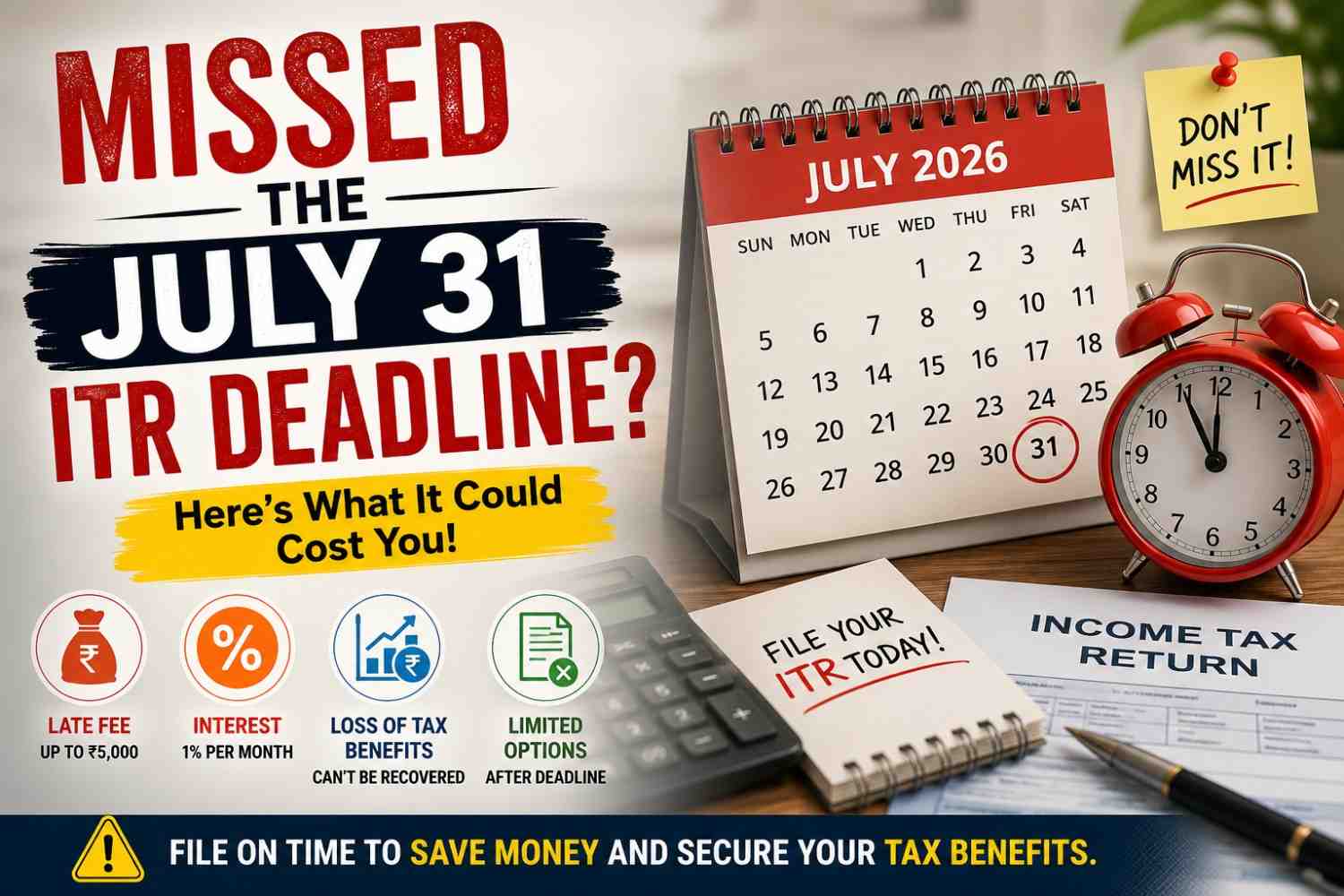
July 31 ITR Deadline: Most taxpayers think missing the July 31 Income Tax Return (ITR) deadline simply means paying a small penalty. While that’s partly true, the biggest financial loss isn’t the late fee—it’s a tax benefit that, once lost, can never be recovered.
If you sold shares, mutual funds, or other investments at a loss, filing your ITR even a day late could cost you thousands—or even lakhs—of rupees in future tax savings.
Here’s everything you need to know before the July 31, 2026 ITR filing deadline. 👇
📌 Who Should Read This?
This guide applies to taxpayers whose ITR filing deadline is July 31, 2026, including:
- 👨💼 Salaried employees
- 👵 Pensioners
- 📈 Investors earning capital gains or losses from shares and mutual funds
- 🏠 Individuals earning income from property (without running a business)
These taxpayers generally file:
- ITR-1 (Sahaj)
- ITR-2
Not applicable if you file ITR-3 or ITR-4 for business or professional income, as your due date is different.
⚖️ New Income Tax Act, 2025? Here’s What You Should Know
Many taxpayers are confused after hearing about the Income Tax Act, 2025.
✅ Don’t worry.
Your ITR for Assessment Year 2026-27 is still governed by the Income Tax Act, 1961. All the rules, penalties and tax provisions mentioned below continue to apply.
💰 The Late Filing Fee Is Actually the Smallest Problem
Under Section 234F, if you miss the July 31 deadline:
- 💸 ₹5,000 late filing fee
- 💸 Only ₹1,000 if your total income is up to ₹5 lakh
- ✅ No late fee if your income is below the taxable filing requirement.
For many taxpayers, that’s where the financial impact ends.
📈 You May Also Pay Interest
Under Section 234A, interest is charged at:
1% per month (or part of a month)
But here’s the good news:
You pay interest only if tax is still unpaid.
That means:
✅ If your employer already deducted TDS
OR
✅ You’re expecting a tax refund
You generally won’t pay any interest at all.
🚨 The Biggest Mistake Most Taxpayers Never See Coming
Here’s where filing late becomes expensive.
Suppose you invested in:
- 📊 Shares
- 📉 Mutual Funds
- 🏦 Other capital assets
…and booked a capital loss this financial year.
Normally, the Income Tax Act allows you to:
✅ Carry forward that loss
✅ Offset it against future capital gains
✅ Save tax for up to 8 assessment years
Sounds great, right?
But there’s one strict condition.
👉 You must file your ITR before the due date.
Miss July 31…
❌ The loss disappears forever.
There is no way to restore it later.
This rule comes under:
- Section 80
- Read together with Section 139(3)
📊 Example: How Filing One Day Late Can Cost ₹40,000
Imagine this:
This year:
- Capital loss = ₹2 lakh
Next year:
- Capital gain = ₹2 lakh
✅ If you filed before July 31
The previous year’s loss cancels out the gain.
Tax payable = Nil
❌ If you filed after July 31
You lose the carry-forward benefit.
If the gain is taxed at 20%:
💸 Tax payable = ₹40,000
That means filing just one day late could cost you ₹40,000 instead of a ₹1,000 late fee.
🏠 One Important Exception
There is one relief.
Loss from a let-out house property can still be carried forward under Section 71B, even if you file late.
Also remember:
You can still adjust this year’s capital loss against gains within the same financial year.
What you lose is only the future tax-saving benefit.
💡 Zero Tax Doesn’t Mean You Can Skip Filing
Many taxpayers believe:
“I don’t have any tax to pay, so filing doesn’t matter.”
That’s incorrect.
Thanks to the Section 87A rebate, taxpayers under the new tax regime may pay:
✅ Zero tax up to ₹12 lakh
or
✅ Up to ₹12.75 lakh for many salaried individuals (subject to applicable rebate conditions).
But if your gross total income exceeds the prescribed filing threshold, you may still be required to file an ITR even if your final tax liability is zero.
Example:
A salaried employee earning ₹9 lakh may pay zero tax after rebate.
Yet they must still file their ITR if they meet the filing conditions.
Miss the deadline…
💸 The late filing fee can still apply.
📉 Another Hidden Cost: Losing the Old Tax Regime
A smaller group of taxpayers may face another setback.
If you benefit from:
- 🏡 Home loan interest deduction
- 🏠 HRA exemption
- 💰 Section 80C investments
- ❤️ Health insurance deduction
- 🎓 Education loan deduction
…the old tax regime could still save you more tax.
However,
Missing the due date may restrict your ability to opt for the old regime where the law requires a timely option, depending on your category of taxpayer and applicable provisions under Section 115BAC.
For many salaried taxpayers, the option rules differ from business taxpayers, so it’s important to check your eligibility before assuming the old regime is unavailable.
📅 Missed July 31? Here’s What You Can Still Do
| Option | Last Date | Cost | What You Lose |
|---|---|---|---|
| Belated Return (Section 139(4)) | December 31, 2026 | Late fee + interest (if applicable) | Cannot carry forward most capital/business losses; other consequences may apply |
| Revised Return (Section 139(5)) | If you already filed, generally up to December 31, 2026 | No separate fee for revision itself | Only available if an original return was already filed |
Remember:
A revised return is only for correcting a return you’ve already submitted.
It cannot replace a return that was never filed.
⏳ What Happens If You Miss December 31 Too?
Even after December 31, one option remains:
👉 Updated Return (Section 139(8A))
However:
❌ You cannot claim a refund.
❌ You cannot carry forward capital losses.
❌ You cannot reduce your tax liability.
Updated returns are mainly meant for taxpayers who need to declare additional income and pay extra tax.
✅ What You Should Do Right Now
If your ITR filing deadline is July 31, 2026, don’t wait until the last evening.
Filing early helps you:
- ✅ Avoid late filing fees
- ✅ Avoid unnecessary interest
- ✅ Receive your refund sooner
- ✅ Keep your compliance record clean
- ✅ Preserve valuable tax benefits like carrying forward capital losses
If you booked losses from shares, mutual funds, or other capital assets, filing on time could save you far more than the late filing fee.
📌 Final Takeaway
For most taxpayers, the ₹1,000 or ₹5,000 late fee isn’t the biggest risk. The real danger is losing tax benefits that could reduce your tax bill for years to come.
If you’ve incurred capital losses, don’t let a missed deadline turn them into a permanent loss. File your Income Tax Return (ITR) before July 31, 2026, and protect your future tax savings. 📄✅