
 bobby
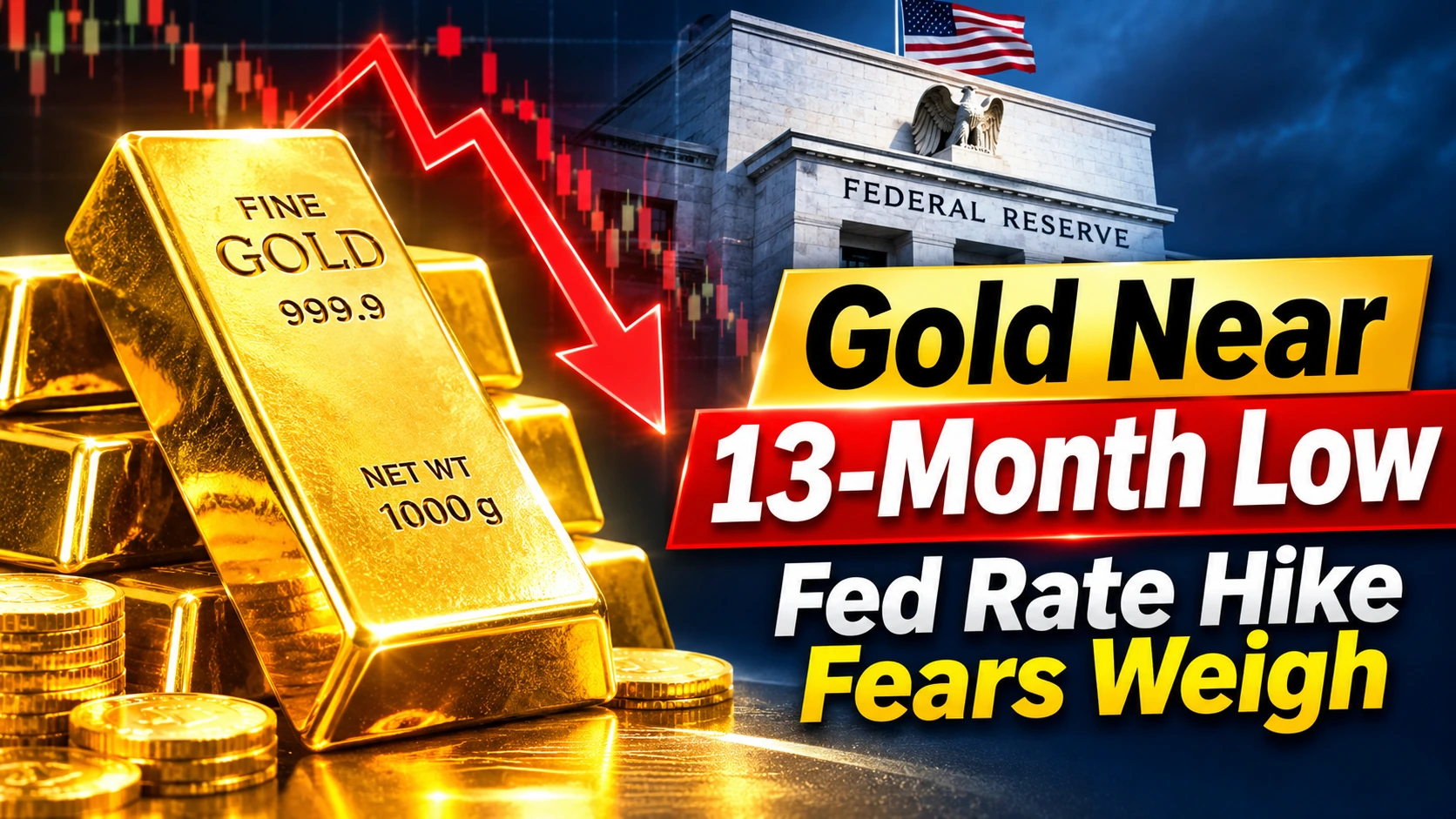
Gold Price Today: Gold prices remained under pressure on Tuesday as a stronger US dollar and expectations of another Federal Reserve interest rate hike weighed on the precious metal. 📉
Spot gold was trading at approximately $3,869.13 per ounce at 03:01 GMT, while US gold futures for December delivery climbed 0.5% to $3,872.10.
Despite the modest recovery, bullion remained close to its lowest level since October 2025, reflecting growing concerns about higher borrowing costs and tighter monetary policy.
Investors were closely monitoring US economic developments and awaiting further signals from the Federal Reserve about its next interest rate decision.
🌟 Gold Market Highlights — November 17, 2026
- Spot gold: Approximately $3,869.13 per ounce at 03:01 GMT.
- US gold futures: $3,872.10 per ounce, up 0.5%.
- Recent low: $3,830.74 per ounce on November 16.
- US dollar: Reached a fresh 19-month high.
- Fed rate expectations: Markets priced in a 95.5% probability of a 25-basis-point increase in December.
These figures reflect a specific reporting period on November 17, not live market prices.
Gold Price Chart: November 2026
Historical spot gold prices in USD per troy ounce
Data: Reuters market reports, November 16-17, 2026. Bar lengths use a $4,000 reference scale. Observations are from different times, not daily closes. Historical information only; not live prices.
📉 Why Are Gold Prices Falling?
Gold prices have faced sustained selling pressure as investors reassess the outlook for US interest rates.
The Federal Reserve’s increasingly restrictive monetary policy expectations have strengthened the dollar and supported higher Treasury yields.
Both developments create difficulties for gold.
Unlike government bonds or interest-bearing savings products, physical gold does not generate regular interest income.
When interest rates rise, investors may find income-producing assets more attractive, reducing the relative appeal of holding bullion.
The recent decline has also reflected changing expectations about how long the Federal Reserve may maintain tighter financial conditions.
Although gold is traditionally regarded as a safe-haven asset, that reputation does not guarantee rising prices during every period of economic uncertainty.
💵 Strong US Dollar Adds Pressure to Gold
One of the biggest factors affecting the gold market has been the strength of the US dollar.
The dollar climbed to a fresh 19-month high on November 17, creating additional challenges for international gold buyers.
Because gold is generally priced in US dollars, a stronger American currency makes the metal more expensive for investors using other currencies.
For example, buyers in India, Europe, and other major markets may face higher local-currency costs even when international dollar-denominated gold prices remain unchanged.
This relationship can reduce demand and limit price recoveries.
However, the connection between gold and the dollar is not perfectly consistent. During periods of severe financial stress, both assets can attract safe-haven demand.
For now, currency strength remains an important factor influencing bullion prices.
🏦 Federal Reserve Rate Hike Expectations Dominate the Market
Investors are paying particular attention to the Federal Reserve’s December monetary policy meeting.
On November 17, futures-market pricing indicated approximately a 95.5% probability of a 25-basis-point interest rate increase, compared with a 4.5% probability of a larger 50-basis-point move.
A basis point equals one-hundredth of a percentage point.
Therefore, a 25-basis-point increase represents a 0.25-percentage-point rise in interest rates.
Higher rates can support the dollar, push bond yields upward, and increase the opportunity cost of holding gold.
These expectations are not guaranteed outcomes. Market-implied probabilities can change rapidly following inflation reports, employment data, and comments from Federal Reserve officials.
Why the Fed’s Next Decision Matters
The central bank’s approach to inflation will play a major role in determining gold’s near-term direction.
If policymakers maintain a restrictive stance, gold could remain under pressure.
Alternatively, evidence of slowing inflation or weaker economic activity could reduce expectations for aggressive rate increases.
That shift might provide some support for precious metals.
📊 Gold Price Drops From Previous Highs
The latest market weakness follows a much larger decline from gold’s record levels earlier in 2026.
Gold reached a reported record high of approximately $5,594.82 per ounce in January before falling sharply during the year.
On November 16, prices touched $3,830.74, their lowest level since October 2025.
That represented a decline of approximately 31.5% from the January peak.
The scale of the correction demonstrates how quickly commodity markets can respond to changing economic expectations.
It also highlights the importance of distinguishing short-term rebounds from sustained trend reversals.
A modest increase following a steep decline does not necessarily mean that selling pressure has ended.
🔍 What Could Influence Gold Prices Next?
Several economic developments could determine whether gold prices recover or face further losses.
1. Federal Reserve Meeting Minutes
Investors were awaiting the minutes of the Federal Reserve’s October 27–28 meeting, scheduled for release on November 18.
The document was expected to provide additional insight into policymakers’ concerns about inflation, economic growth, and future interest rates.
2. US Inflation Data
Inflation remains a central influence on monetary policy.
Persistently elevated inflation could strengthen expectations for higher interest rates, while softer readings might reduce pressure on gold.
3. Treasury Bond Yields
Higher Treasury yields can make interest-bearing assets more competitive with gold.
A sustained decline in yields could improve the relative attractiveness of bullion.
4. Global Economic Uncertainty
Geopolitical developments, financial-market volatility, and economic growth concerns may also affect demand for safe-haven assets.
Gold’s reaction will depend on how these factors interact with the dollar and interest-rate expectations.
🇮🇳 What Does the Gold Price Decline Mean for Indian Buyers?
International gold price movements are closely watched in India, one of the world’s major gold-consuming markets.
However, a decline in global gold prices does not automatically produce an identical reduction in Indian retail prices.
Domestic gold prices are influenced by several factors, including:
- The US dollar-to-Indian rupee exchange rate.
- Import duties and applicable taxes.
- Local demand and supply conditions.
- Jewellery-making charges and retailer premiums.
A weaker rupee can offset some of the benefits of falling international bullion prices.
Therefore, Indian consumers should distinguish global spot gold quotations from local 22-karat and 24-karat retail prices.
The international figures discussed here are quoted in US dollars per troy ounce, not Indian rupees per 10 grams.
📈 Gold Price Outlook: Can Bullion Recover?
The near-term outlook for gold remains closely connected to monetary policy expectations.
A continued rise in the US dollar and Treasury yields could maintain downward pressure on bullion.
However, a softer dollar, falling yields, or changing expectations about Federal Reserve policy could help gold stabilise.
Investors will also monitor whether demand for physical gold and investment products remains resilient.
A lasting recovery would likely require stronger evidence that the factors driving the recent decline are beginning to ease.
For now, market uncertainty remains elevated, and short-term price movements could be volatile.
❓ Frequently Asked Questions About Gold Prices
1. What was the gold price on November 17, 2026?
Spot gold was approximately $3,869.13 per ounce at 03:01 GMT on November 17, 2026. Prices changed throughout the trading session.
2. Why was gold trading near a 13-month low?
Gold was pressured by a strong US dollar, higher Treasury yields, and expectations that the Federal Reserve would raise interest rates in December.
3. How do higher interest rates affect gold?
Higher interest rates increase the opportunity cost of holding non-yielding assets such as gold. They can also support the dollar, making bullion more expensive for international buyers.
4. Could gold prices recover?
A recovery is possible if the dollar weakens, bond yields decline, or expectations for further Federal Reserve rate hikes ease. None of these outcomes is guaranteed.
5. Does a fall in international gold prices mean cheaper gold in India?
Not necessarily. Indian gold prices also depend on the rupee exchange rate, import duties, taxes, and local market conditions.
🏁 Conclusion
The gold price on November 17, 2026, reflected growing pressure from a stronger US dollar and expectations of tighter Federal Reserve monetary policy.
Although bullion showed signs of stabilisation after its sharp decline, prices remained near their lowest levels in more than a year.
The next major influences included Federal Reserve policy signals, inflation trends, Treasury yields, and global demand.
For gold buyers and market observers, the key question was whether these economic pressures would continue or gradually ease.
Will gold regain its strength, or will the US dollar and interest-rate expectations keep prices under pressure?
Market data in this article is historical and should not be interpreted as a live quotation or personalised investment recommendation.