 bobby
bobby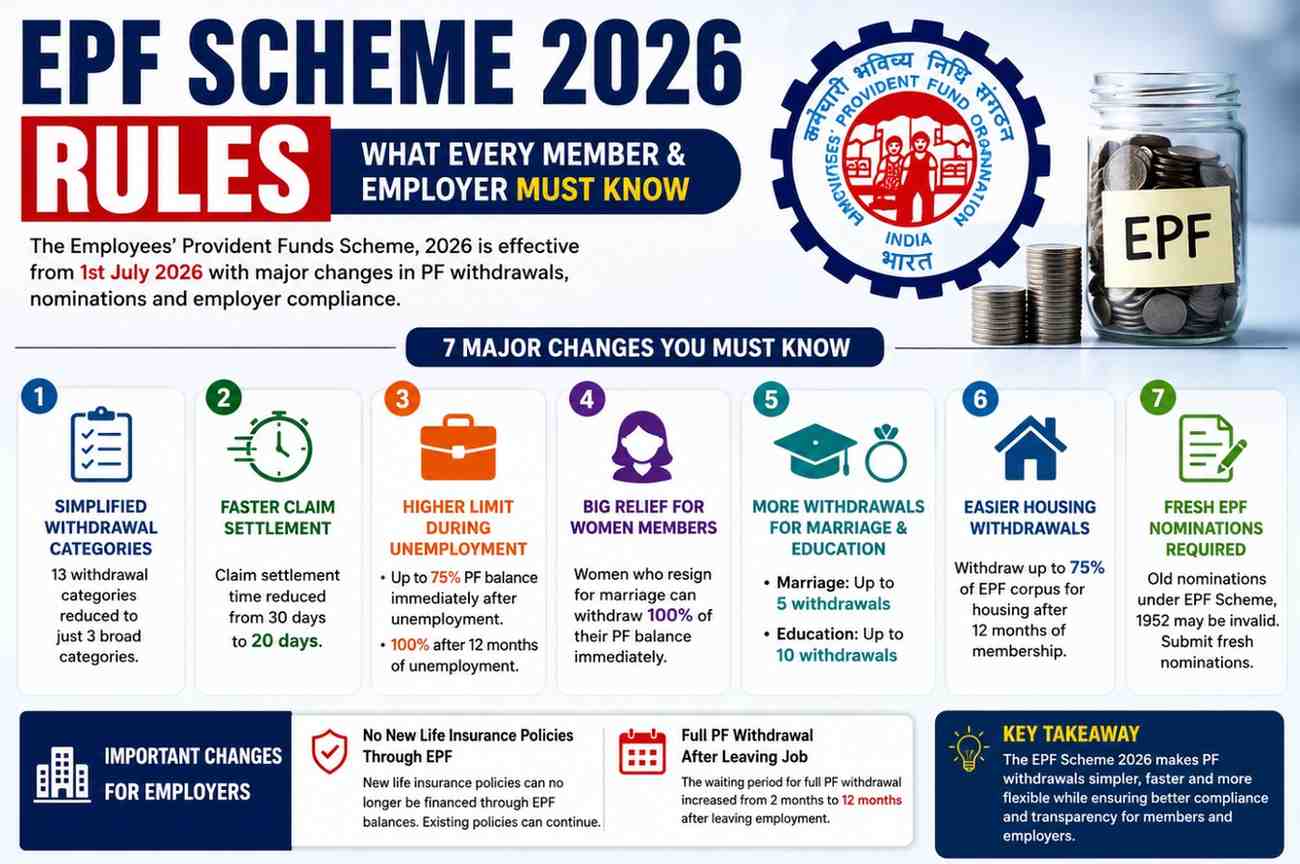
EPF Scheme 2026 : The EPF Scheme, 2026 is now in effect from July 1, 2026, introducing the biggest overhaul of Employees’ Provident Fund (EPF) rules in decades. From simplified PF withdrawals to fresh nomination requirements and stricter employer compliance, here’s everything employees, HR professionals and employers need to know.
📌 EPF Scheme 2026: What’s New?
The Ministry of Labour and Employment notified the Employees’ Provident Funds Scheme, 2026 on June 29, 2026, and the new rules came into force on July 1, 2026.
The updated scheme consolidates several EPFO reforms introduced over the last two years, making PF withdrawals simpler, improving member convenience and streamlining employer compliance.
👉 What remains unchanged?
- ✅ Employee EPF contribution: 12% of basic salary + DA
- ✅ Employer EPF contribution: 12%
- ✅ Statutory wage ceiling: ₹15,000 per month
However, several important rules have changed.
🚨 1. EPF Withdrawals Simplified Into Just Three Categories
One of the biggest reforms is the simplification of advance withdrawal rules.
Earlier, members had to choose from 13 different withdrawal categories.
Under the EPF Scheme 2026, these have been merged into just three simple categories:
🏥 Essential Needs
- Medical emergencies
- Illness
- Other urgent financial requirements
🏠 Housing Needs
- Buying a house
- Constructing a home
- Home loan repayment
- House renovation
⚠️ Special Circumstances
- Marriage
- Education
- Unemployment
- Other approved situations
This makes the withdrawal process easier and reduces confusion.
⏳ 2. Faster PF Claim Settlement
Good news for EPF members!
The claim settlement period has now been reduced from:
- ❌ Earlier: 30 days
- ✅ Now: 20 days
Another important relief:
If online claim submission fails due to technical issues, members can now submit physical claim forms, ensuring that genuine claims are not delayed.
💰 3. Higher PF Withdrawal Limits During Unemployment
The new scheme provides greater financial support during unemployment.
Members can now withdraw:
✅ Up to 75% of their EPF balance immediately after becoming unemployed.
✅ 100% of the EPF balance after remaining unemployed for 12 months.
This provides greater financial security during difficult periods.
👰 4. Big Relief for Women Members
A major change has been introduced for female EPF subscribers.
Women who resign specifically for marriage can now:
💯 Withdraw 100% of their EPF balance immediately.
This is a significant improvement over the previous provisions and offers better financial flexibility during a major life event.
🎓 5. More Withdrawals Allowed for Marriage and Education
The EPF Scheme 2026 has also increased the number of permitted withdrawals.
🎉 Marriage
Earlier:
- ❌ Maximum 3 withdrawals
Now:
- ✅ Maximum 5 withdrawals
📚 Education
Earlier:
- ❌ Maximum 3 withdrawals
Now:
- ✅ Maximum 10 withdrawals
This provides members with greater flexibility in planning important family and educational expenses.
🏡 6. Easier Housing Withdrawals
Buying or building a home has become easier under the new rules.
Members who complete at least 12 months of EPF membership can withdraw:
✅ Up to 75% of their total EPF corpus, including:
- Employee contribution
- Employer contribution
- Accumulated interest
The withdrawn amount can be used for:
🏠 Buying a house
🏗️ Constructing a home
🏦 Home loan repayment
🔨 House renovation
📝 7. Fresh EPF Nominations Are Highly Recommended
One of the most important changes affects nominations.
Under Paragraph 44(3) of the EPF Scheme, 2026, any nomination made under the EPF Scheme, 1952 becomes invalid to the extent it conflicts with the new rules.
Employees should:
✅ Review their EPF nomination
✅ File a fresh nomination if required
✅ Update nominee details after:
- 💍 Marriage
- 👶 Birth of a child
- 💔 Divorce
- ⚰️ Death of a nominee
Keeping nominations updated helps avoid disputes and delays during claim settlement.
🏢 Important Changes for Employers and HR Teams
The EPF Scheme 2026 also introduces new compliance requirements.
📌 Life Insurance Through EPF
❌ New life insurance policies can no longer be financed using EPF balances.
However,
✅ Premiums for existing policies may continue under applicable rules.
📌 Full PF Withdrawal After Leaving a Job
The waiting period has changed significantly.
Earlier:
⏳ 2 months
Now:
⏳ 12 months
Employers should update their employee exit policies and communicate the revised timelines clearly.
📋 EPF Scheme 2026: Key Changes at a Glance
| Feature | Earlier Rule | New Rule (2026) |
|---|---|---|
| Withdrawal categories | 13 | 3 |
| Claim settlement | 30 days | 20 days |
| Unemployment withdrawal | Limited | 75% immediately, 100% after 12 months |
| Marriage withdrawals | 3 | 5 |
| Education withdrawals | 3 | 10 |
| Housing withdrawal | Stricter eligibility | Up to 75% after 12 months |
| Female resignation for marriage | Limited | 100% withdrawal allowed |
| Full PF withdrawal after leaving job | 2 months | 12 months |
✅ Final Takeaway
The EPF Scheme 2026 marks one of the most significant updates to India’s Provident Fund framework in recent years. The reforms simplify PF withdrawals, speed up claim processing, increase withdrawal flexibility for unemployment, marriage, education and housing, while also introducing new nomination and employer compliance requirements.
If you’re an EPF member, it’s important to review your PF account, update your nomination details and understand the revised withdrawal rules. Employers and HR departments should also update their compliance processes to align with the new scheme and ensure employees are informed about these important changes.