 bobby

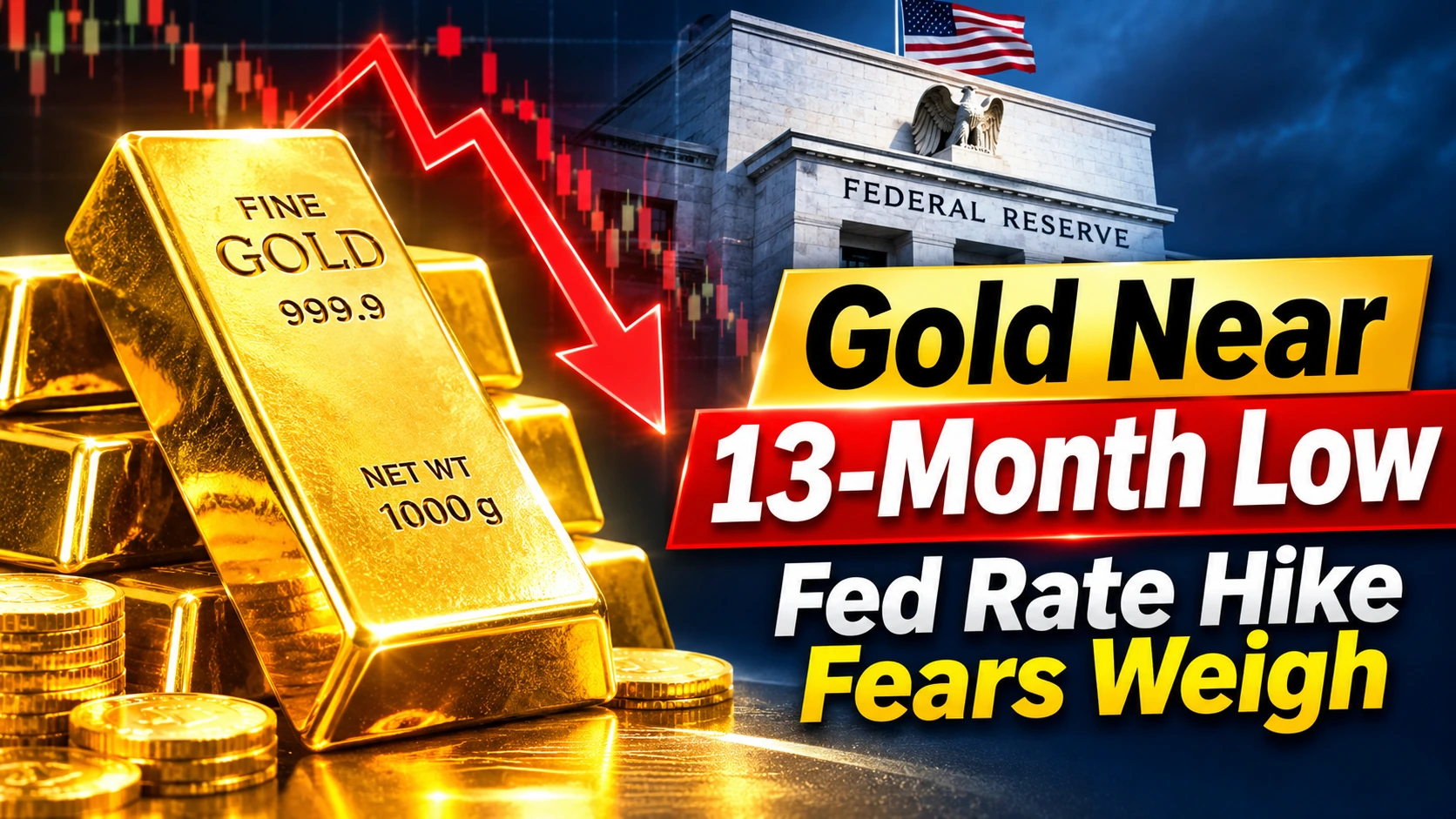
Gold Price Crash: A sharp fall in gold and silver prices triggered heavy selling in Indian gold loan, jewellery and precious-metal-related stocks on Friday, November 20, 2026. Major companies, including Muthoot Finance, Manappuram Finance, Kalyan Jewellers, Titan and IIFL Finance, witnessed significant intraday declines as investors reacted to the sudden correction in bullion prices.
Interestingly, the weakness in gold-related shares came even as India’s benchmark stock market indices recovered strongly from early losses. While the Sensex and Nifty moved higher during the session, several jewellery and gold financing companies remained under pressure.
The market reaction raised an important question: Why are gold loan and jewellery stocks falling so sharply when the broader stock market is recovering?
Here is a detailed look at the November 20 gold price crash, affected companies, market performance and possible implications.
📉 Gold Prices Crash: What Happened on November 20, 2026?
Gold prices witnessed a steep decline in domestic and international markets, creating uncertainty across gold-dependent businesses.
On the Multi Commodity Exchange (MCX), December gold futures traded near ₹1,22,435 per 10 grams at approximately 9:04 AM on November 20. This represented a decline of around ₹5,017, or 3.94%, compared with the previous close.
The correction was particularly significant because gold had already been experiencing sustained selling pressure.
Internationally, gold futures also declined sharply as investors reassessed the outlook for US interest rates, the dollar and global financial markets.
A stronger US dollar and expectations of further interest-rate increases by the US Federal Reserve were among the major factors weighing on precious metals.
Gold generally faces pressure when interest rates rise because it does not provide regular interest income. Higher yields on competing assets can make holding bullion less attractive.
The sudden fall affected not only physical gold prices but also shares of companies whose businesses depend heavily on the precious metal.
📉 Gold Price Crash: Stocks Hit Hardest
November 20, 2026 | Approximate intraday declines
Source: Reported market movements on November 20, 2026. Percentages are approximate and represent intraday declines, not official closing returns. This chart is historical and does not update automatically.
💥 Kalyan Jewellers Share Price Falls Nearly 7%
Kalyan Jewellers was among the prominent jewellery stocks affected during Friday’s trading session.
The company’s shares had closed near ₹661 in the previous session. On November 20, the stock opened weakly and faced substantial selling pressure.
Kalyan Jewellers shares declined to an intraday low of approximately ₹617, representing a fall of nearly 7%.
The stock subsequently recovered part of its losses, indicating that the initial decline was more severe than the later trading movement.
Other jewellery companies also experienced weakness.
Jewellery Stocks Affected by the Gold Price Fall
- Kalyan Jewellers: Declined nearly 7% at its intraday low.
- Titan Company: Fell as much as approximately 4% intraday.
- PC Jeweller: Dropped more than 3%.
- Senco Gold: Declined around 3%.
- Thangamayil Jewellery: Fell approximately 4%.
These movements highlighted the broader pressure on listed jewellery companies.
However, falling gold prices do not necessarily have a permanently negative effect on jewellery retailers.
Lower prices can eventually encourage consumers to purchase ornaments, especially when households have postponed purchases because of high gold rates.
The immediate challenge for jewellery companies is managing inventory costs, profit margins and uncertainty in consumer demand.
🏦 Muthoot Finance and Manappuram Finance Shares Under Pressure
Gold loan companies also experienced significant selling pressure as bullion prices declined.
Muthoot Finance, Manappuram Finance and IIFL Finance were among the lenders affected.
According to market reports, shares of these gold financing companies fell by as much as approximately 5% during the November 20 session.
The reason is closely connected to their business model.
Gold loan companies provide secured loans against jewellery pledged by customers. The value of the gold determines how much money a borrower can receive.
When gold prices decline, the market value of the pledged jewellery also falls.
Why Falling Gold Prices Matter for Gold Loan Companies
Consider a simplified example.
Suppose a customer pledges gold jewellery valued at ₹1,00,000.
If the lender offers a loan equivalent to 75% of the collateral value, the customer may receive ₹75,000.
Now imagine the market value of that jewellery falls by 10%, reducing its value to ₹90,000.
At the same illustrative lending ratio, the corresponding loan amount would be ₹67,500.
This example shows how falling gold prices can reduce the amount of fresh credit available against the same quantity of jewellery.
For existing loans, a substantial decline in collateral value can also reduce lenders’ protection against potential losses.
However, lower gold prices do not automatically mean that gold loan companies will experience higher defaults.
The actual impact depends on lending practices, collateral buffers, repayment performance and the duration of the price correction.
📊 Indian Stock Market Recovers Despite Gold Stock Sell-Off
One of the most interesting developments on November 20 was the contrasting performance of the broader Indian stock market and gold-related shares.
The Sensex initially declined by more than 600 points during the session before staging a strong recovery.
At one stage, the benchmark index gained more than 900 points from its previous closing level.
According to the source report’s market snapshot at approximately 2:55 PM, the Sensex was trading around 870 points higher, just below 83,900.
Meanwhile, the Nifty was up approximately 250 points, trading near 25,760.
Despite this broader market strength, several gold loan and jewellery stocks remained under pressure.
The divergence demonstrated how individual sectors can react differently to commodity-price movements, even when overall stock market sentiment improves.
Investors were also monitoring weakness in international technology and artificial intelligence-related shares, alongside changing expectations for global interest rates.
🪙 Gold ETFs Fall as Bullion Prices Decline
The impact of the gold price crash extended beyond individual company shares.
Gold exchange-traded funds, commonly known as Gold ETFs, also recorded sharp losses.
During the November 20 session, several domestic Gold ETFs declined approximately 4.2% to 5.5%.
Gold ETFs are investment products designed to track the price of gold, subject to expenses and tracking differences.
Therefore, when gold prices fall sharply, the market value of these funds generally declines as well.
The correction demonstrated that gold-backed investment products can experience significant short-term volatility.
Although gold is often considered a defensive asset, its price is still influenced by interest rates, currency movements, investment flows and changing market expectations.
⚠️ Silver Price Crash Hits Hindustan Zinc and Vedanta
Silver prices also experienced substantial selling pressure during the same trading session.
The decline affected companies with meaningful exposure to silver production and related commodities.
Hindustan Zinc, a major Indian silver producer, saw its shares fall by approximately 5% at one stage.
Its parent company, Vedanta, also experienced a decline of a similar magnitude, according to the original report.
Silver-linked ETFs came under pressure as well.
Unlike gold, silver has significant industrial applications in addition to investment demand.
Its price can therefore respond to both financial-market developments and expectations for industrial activity.
The combined decline in gold and silver created broader weakness across precious-metal-related investments.
🌍 Why Are Gold and Silver Prices Falling?
Several factors contributed to the precious metals sell-off in November 2026.
1. US Federal Reserve Interest-Rate Expectations
Expectations of additional interest-rate increases in the United States weighed on gold prices.
Higher interest rates can increase the opportunity cost of holding non-interest-bearing assets such as gold.
2. Stronger US Dollar
Gold is internationally priced in US dollars.
A stronger dollar can make gold more expensive for buyers using other currencies, potentially reducing demand.
3. Global Market Volatility
Selling pressure in international equity markets contributed to uncertainty across asset classes.
During periods of market stress, some investors may sell liquid holdings, including precious metals, to raise cash.
4. Profit Booking and Market Sentiment
After significant price movements, traders may reduce their positions to protect profits or limit potential losses.
Such selling can amplify short-term volatility, especially when market confidence weakens.
💍 Can Lower Gold Prices Benefit Jewellery Buyers?
Although falling gold prices created pressure on jewellery stocks, consumers could eventually benefit from more affordable ornaments.
Lower prices may encourage purchases for weddings, family celebrations and other important occasions.
However, the final retail price of jewellery also depends on making charges, taxes, design and purity.
For jewellery businesses, the effects can be mixed.
Lower gold prices may support sales volumes, but rapid declines can create inventory valuation losses when companies hold stock purchased at higher prices.
The financial outcome depends on inventory management, hedging strategies and consumer demand.
🔎 What Should Market Participants Watch Next?
The direction of gold-related stocks will depend on several developments.
Important factors include international bullion prices, US Federal Reserve decisions, the dollar’s movement and domestic jewellery demand.
For gold loan companies, loan growth, repayment performance, collateral coverage and competition will remain important indicators.
Jewellery businesses will be evaluated on sales volumes, inventory management and operating margins.
Because these factors can change quickly, historical intraday price declines should not be treated as forecasts of future stock performance.
❓ Frequently Asked Questions
1. Why did Muthoot Finance and Manappuram Finance shares fall?
Their shares declined amid falling gold prices because lower bullion values can reduce collateral coverage and affect the amount of new loans issued against pledged jewellery.
2. How much did Kalyan Jewellers shares fall on November 20, 2026?
Kalyan Jewellers shares fell nearly 7% intraday, reaching approximately ₹617 after closing near ₹661 in the previous session. The stock later recovered part of the decline.
3. Why did Titan and PC Jeweller shares decline?
Both companies faced selling pressure as investors assessed the potential impact of falling gold prices on jewellery inventory values, margins and near-term business conditions.
4. Did Gold ETFs also decline?
Yes. Several domestic Gold ETFs declined approximately 4.2% to 5.5% during the November 20 session as gold prices fell sharply.
5. Can falling gold prices increase jewellery demand?
Lower prices can improve affordability and encourage purchases. However, the impact depends on consumer confidence, price stability, making charges and broader economic conditions.
✅ Conclusion: Gold Price Crash Creates Pressure Across Multiple Sectors
The November 20, 2026 gold price crash triggered significant volatility across Indian gold loan companies, jewellery retailers, precious-metal producers and exchange-traded funds.
Kalyan Jewellers, Titan, Muthoot Finance, Manappuram Finance and IIFL Finance were among the major stocks affected.
Meanwhile, Hindustan Zinc and Vedanta faced pressure as silver prices declined.
The sell-off highlighted the strong relationship between commodity prices and businesses dependent on precious metals.
Although falling gold prices may eventually improve jewellery affordability, sharp short-term corrections can create challenges for lenders, retailers and investors.
The key question now is whether gold and silver prices will stabilize or remain under pressure as global interest-rate expectations evolve.
Disclaimer: This article is for general financial news and educational purposes only. The stock movements described are historical intraday figures from November 20, 2026, not current market quotations or investment recommendations.