 bobby
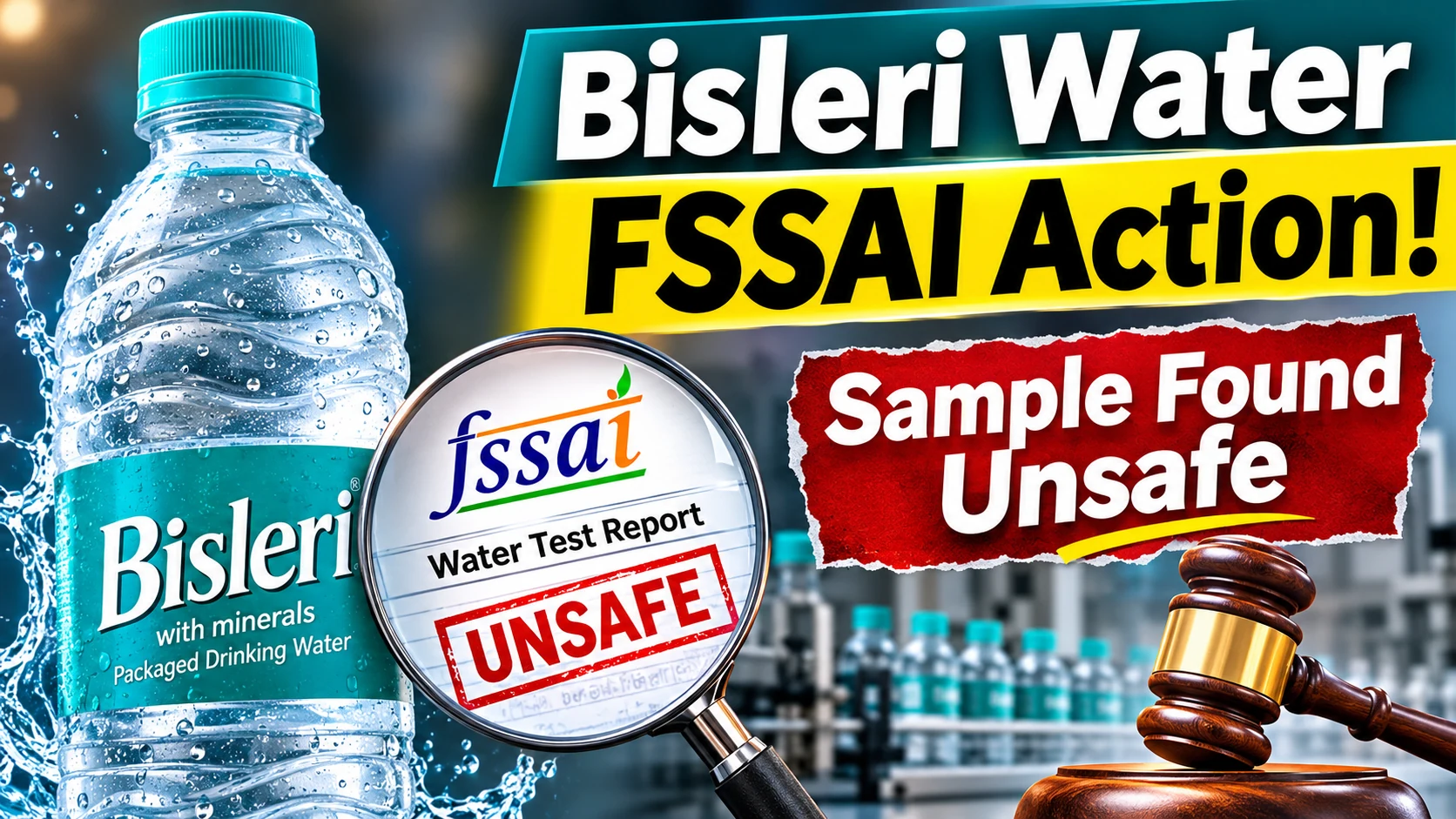
Bisleri Water FSSAI News: India’s leading packaged drinking water brand, Bisleri, has come under regulatory scrutiny after the Food Safety and Standards Authority of India (FSSAI) sanctioned prosecution against Bisleri International Pvt Ltd over a packaged drinking water sample declared unsafe during laboratory testing.
The development has raised questions about bottled water quality, chemical contamination, and consumer safety across India.
However, Bisleri has disputed the implications of the findings, maintaining that its products are safe for consumption. The company says subsequent tests showed compliance with prescribed standards and that it will cooperate with the regulator.
Here is everything consumers need to know about the Bisleri water FSSAI case, laboratory findings, health concerns, and the latest developments.
🚨 Why Has FSSAI Approved Prosecution Against Bisleri?
The controversy began after FSSAI collected a regulatory sample of packaged drinking water from Bisleri’s manufacturing operations in Goa.
According to the regulator, the sample failed to meet prescribed safety standards because of excessive bromate levels.
Following the initial laboratory findings, the water sample was classified as unsafe under the Food Safety and Standards Act, 2006.
Bisleri challenged the findings and requested further examination.
The sample was subsequently examined by a referral food laboratory, which also classified it as unsafe, citing the detection of polynuclear aromatic hydrocarbons (PAHs).
Based on the laboratory findings, FSSAI announced on November 22, 2026, that it had sanctioned prosecution against Bisleri International.
Importantly, this regulatory decision authorizes legal proceedings. It does not establish that Bisleri has been convicted of violating food safety laws.
📊 Bisleri Water FSSAI Case: Key Facts
Comparison of the reported regulatory findings and the company’s position, as of November 23, 2026.
| Parameter | Reported Finding | Company Response |
|---|---|---|
| Initial sampling | September 30, 2025 | Six samples collected |
| Initial results | One sample flagged | Five samples passed |
| Bromate | 12 micrograms/L | Later tests within limit |
| Prescribed limit | 10 micrograms/L | Limit not disputed |
| Referral analysis | PAHs detected; unsafe finding | Disputed testing conclusions |
| Regulatory action | Prosecution sanctioned | Company says it will cooperate |
| Legal outcome | No conviction established | Further process pending |
Note: The table distinguishes reported regulatory findings from the company’s statements. A prosecution sanction is not a finding of guilt.
🧪 Bisleri Water Test Report: What Did Laboratories Find?
The laboratory findings are central to the ongoing dispute.
According to Bisleri’s explanation, FSSAI collected six samples from its Goa facility on September 30, 2025.
Five samples passed the quality checks, while one reportedly contained bromate at 12 micrograms per litre.
The prescribed limit was 10 micrograms per litre.
This means the reported bromate concentration in the flagged sample was 20% above the specified limit.
However, Bisleri says subsequent testing found bromate levels within the permissible range.
The referral laboratory also reported the presence of PAHs, introducing another concern regarding the sample’s compliance with drinking water standards.
The company has pointed to differences between laboratory findings while defending its quality-control procedures.
What Is Bromate in Drinking Water?
Bromate is a chemical compound that can form when water containing naturally occurring bromide is treated with ozone.
Ozonation is one of the processes used to disinfect drinking water.
Excessive bromate exposure is a concern because certain bromate compounds have been associated with potential cancer risks.
However, the presence of bromate above a regulatory limit in one sample does not automatically establish that consumers have suffered harm.
The actual health risk depends on factors including concentration, duration of exposure, and consumption.
What Are Polynuclear Aromatic Hydrocarbons?
Polynuclear aromatic hydrocarbons, also called polycyclic aromatic hydrocarbons or PAHs, are a group of chemical compounds that can originate from environmental pollution and incomplete combustion of organic materials.
Some PAHs are associated with significant health concerns, including carcinogenic effects.
Their presence in drinking water requires careful scientific assessment and regulatory scrutiny.
In the Bisleri case, FSSAI said the referral laboratory’s findings supported its decision to classify the sample as unsafe.
🏭 Bisleri Responds: Company Says Its Drinking Water Is Safe
Following the regulatory announcement, Bisleri issued a statement defending the safety of its bottled drinking water.
The company explained that the matter originated from testing conducted approximately 14 months earlier, in September 2025.
According to Bisleri, subsequent laboratory examinations indicated that bromate concentrations were within prescribed limits.
The company said it submitted additional test findings to FSSAI’s Western Regional Office in February 2026.
Bisleri also maintained that it had not received a formal notice concerning the latest prosecution announcement.
The company stated that drinking water safety remains a priority and highlighted its manufacturing quality-control procedures.
According to its response, Bisleri conducts more than 90 quality tests across a 10-step manufacturing process.
It also confirmed its intention to cooperate with FSSAI through the appropriate regulatory process.
These are the company’s statements and should be distinguished from FSSAI’s laboratory findings and enforcement decision.
⚖️ What Happens After FSSAI Sanctions Prosecution?
The Food Safety and Standards Act, 2006, establishes the legal framework for regulating food safety in India.
Packaged drinking water is covered by this legislation.
When a regulatory sample is found unsafe, authorities can initiate enforcement procedures, including prosecution where legally justified.
However, approval to prosecute is only one stage of the process.
Any subsequent court proceedings must consider the relevant evidence, laboratory findings, applicable legal provisions, and arguments presented by the parties.
Bisleri will have an opportunity to contest the allegations through the legal process.
The regulator’s announcement should therefore not be confused with a final judicial determination.
📊 Bisleri FSSAI Case: Key Facts at a Glance
| Particulars | Reported details |
|---|---|
| Company | Bisleri International Pvt Ltd |
| Regulator | FSSAI |
| Manufacturing location | Goa, India |
| Initial sampling | September 30, 2025 |
| Initial concern | Bromate above prescribed limit |
| Reported bromate level | 12 µg/L |
| Prescribed bromate limit | 10 µg/L |
| Referral laboratory concern | Detection of PAHs |
| Prosecution sanction | November 22, 2026 |
| Company’s position | Disputes safety concerns; cites subsequent tests |
| Legal status | Prosecution sanctioned; no conviction established |
💧 Is Bisleri Water Safe to Drink Now?
This is one of the most important questions for consumers following the latest Bisleri water news.
The FSSAI action concerns a specific regulatory sample collected from the company’s Goa facility.
It does not establish that every Bisleri bottle, production batch, or manufacturing facility has failed safety standards.
Bisleri maintains that its bottled water is safe for consumption.
Reuters also reported that a government source said subsequent product testing found no further water-quality problems.
However, the original sample findings remain the subject of regulatory action.
Consumers should avoid assuming that the laboratory findings apply to every Bisleri product. Equally, the company’s assurances do not automatically invalidate the regulator’s findings.
Further official updates will help clarify the case’s outcome.
🔍 FSSAI Plans Wider Packaged Drinking Water Checks
The regulatory action could have implications beyond Bisleri.
According to Reuters, authorities plan additional testing of Bisleri products and packaged drinking water sold by other companies.
Such testing could help regulators assess whether the identified concerns are isolated or require broader industry attention.
India’s packaged drinking water market serves millions of consumers, including households, offices, restaurants, and travellers.
Maintaining consistent quality standards is particularly important because consumers frequently purchase bottled water expecting it to meet regulated safety requirements.
The latest development highlights the importance of transparent laboratory testing, reliable manufacturing controls, and timely regulatory communication.
🛡️ How Can Consumers Check Packaged Drinking Water Safety?
Consumers cannot reliably identify chemical contamination simply by looking at bottled water.
Nevertheless, basic precautions can help reduce avoidable risks.
- Check that the bottle is properly sealed before purchasing.
- Examine the manufacturing date, batch details, and packaging information.
- Avoid bottles showing visible damage, leakage, or signs of tampering.
- Purchase packaged drinking water from reputable retailers.
- Follow official product-specific recalls or safety advisories.
- Report suspicious products to the appropriate food safety authority.
These precautions cannot replace laboratory testing, but they can help consumers make more informed purchasing decisions.
❓ Frequently Asked Questions About Bisleri Water FSSAI News
1. Why is FSSAI taking action against Bisleri?
FSSAI sanctioned prosecution after a packaged drinking water sample was declared unsafe following laboratory findings involving bromate and PAHs.
2. Is all Bisleri water unsafe?
No such conclusion has been established. The reported regulatory action concerns a specific sample, not every Bisleri product or batch.
3. What was the bromate level in the Bisleri sample?
According to Bisleri, the initial test reported 12 micrograms per litre against a prescribed limit of 10 micrograms per litre.
4. What has Bisleri said about the allegations?
Bisleri maintains that its drinking water is safe, says subsequent tests showed compliance, and has expressed willingness to cooperate with FSSAI.
5. Has Bisleri been found guilty by a court?
The reported action is a sanction for prosecution. It is not a court conviction.
6. Will FSSAI test other packaged drinking water brands?
Reuters reported that authorities planned additional checks involving Bisleri and other packaged drinking water brands.
📝 Conclusion: What Comes Next in the Bisleri Water Case?
The Bisleri water FSSAI news has brought renewed attention to packaged drinking water standards and regulatory oversight in India.
While FSSAI has sanctioned prosecution following laboratory findings, Bisleri disputes the safety concerns and maintains that its products remain safe for consumers.
The case now raises important questions about laboratory testing, regulatory procedures, and how companies communicate food safety concerns.
The eventual outcome will depend on the legal process and further evidence.
For consumers, the key message is to follow verified regulatory updates rather than assume that one flagged sample represents every product sold under a major brand.
What do you think about FSSAI’s action against Bisleri? Should packaged drinking water companies face more frequent safety inspections? Share your opinion in the comments.