
 bobby
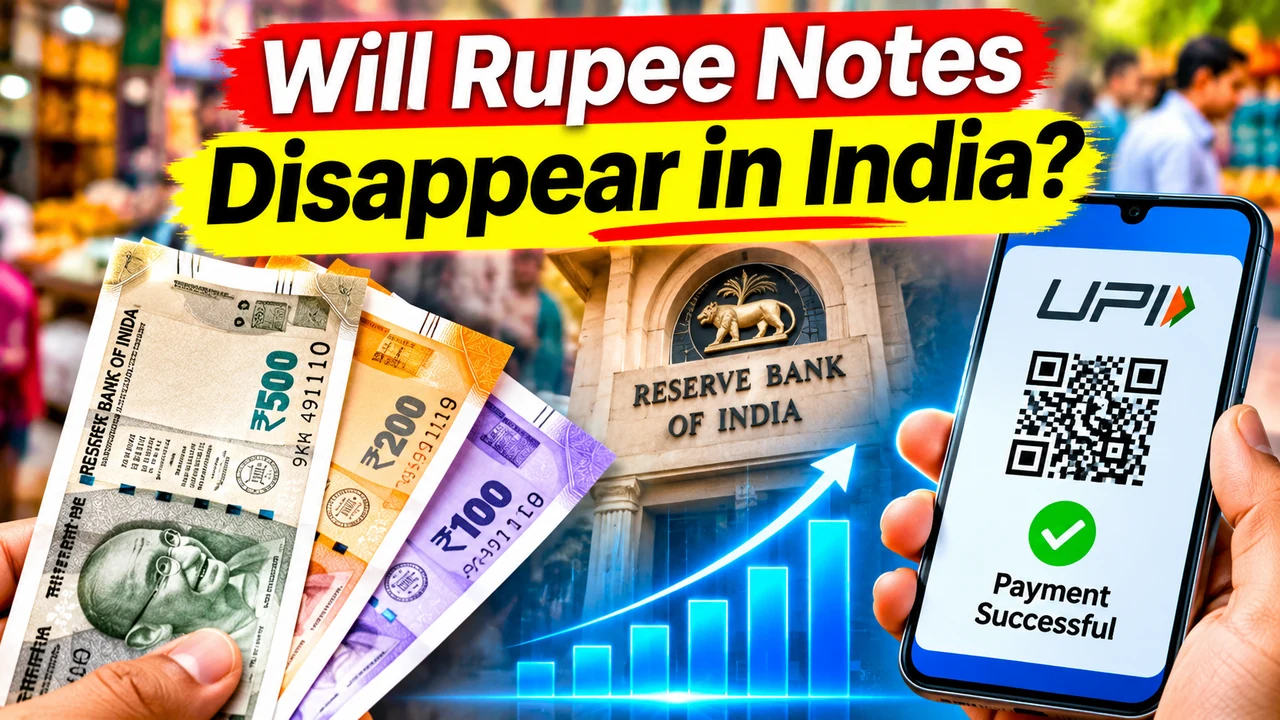
Will Rupee Notes Disappear in India:India is witnessing a remarkable transformation in the way people spend, save, and transfer money. From roadside tea stalls and vegetable markets to jewellery showrooms and shopping malls, digital payments have become an essential part of everyday life.
The rapid growth of the Unified Payments Interface (UPI) has raised an important question: Will physical rupee notes eventually disappear from India?
Although millions of Indians increasingly prefer smartphones over wallets, official currency data suggests that cash continues to play an important role in the country’s financial ecosystem.
📱 UPI Revolution: India Moves Towards a Digital Economy
Introduced in 2016, UPI has transformed India’s payment landscape by allowing users to transfer money instantly through mobile applications.
Consumers no longer need to carry large amounts of cash or search for exact change while making everyday purchases.
According to figures reported by Dinamalar, citing the Union Finance Ministry and the National Payments Corporation of India (NPCI), India’s UPI ecosystem has achieved remarkable growth.
| UPI Statistics | Reported Figures |
|---|---|
| UPI users as of June 2026 | 55.49 crore |
| FY 2025–26 transactions | 24,162 crore |
| FY 2025–26 transaction value | ₹314 lakh crore |
| October 2026 transactions | 2,546 crore |
| October 2026 transaction value | ₹31.53 lakh crore |
These figures illustrate how digital payments are becoming deeply integrated into India’s economy.
🚀 Why Digital Payments Are Becoming More Popular
The convenience of making instant payments has encouraged consumers and businesses to adopt digital transactions.
A simple QR code allows customers to purchase products, pay bills, transfer money, and access services without carrying physical currency.
For small businesses, digital transactions reduce the inconvenience of handling change and simplify payment collection.
Other important factors supporting digital payment adoption include smartphone penetration, affordable internet connectivity, improved banking infrastructure, and growing consumer awareness.
Digital payments also provide transaction histories, making it easier for individuals and businesses to review their financial activities.
📊 India’s Digital Payments vs Cash Growth
FY 2025–26 | Year-on-Year Growth
📱 India’s UPI Revolution
June 2026
October 2026
October 2026
FY 2025–26
Source: RBI Annual Report 2025–26 and Dinamalar, November 25, 2026. Growth indicators are not market shares. October 2026 UPI figures are as reported by Dinamalar.
🏪 How UPI Is Transforming Small Businesses
The digital payment revolution is no longer limited to metropolitan shopping centres or large businesses.
Local merchants, street vendors, transport operators, and neighbourhood shops increasingly accept electronic payments.
A report from Coimbatore indicates that several local businesses receive UPI payments from approximately 60–70% of their customers.
Even small purchases costing ₹5, ₹10, or ₹20 can be completed electronically. QR codes and audio payment confirmation devices allow merchants to serve customers without repeatedly counting cash or searching for change.
For small traders, these improvements can make everyday business operations more convenient.
📊 Are Indian Rupee Notes Really Disappearing?
Despite the impressive growth of digital payments, official data presents a different picture of physical currency.
According to the Reserve Bank of India’s Annual Report 2025–26, the total value of banknotes in circulation increased by 11.9%, while the number of banknotes increased by 10.5% during the financial year.
Meanwhile, UPI transaction volumes grew by 30%, demonstrating the continued expansion of electronic payments.
| Financial Indicator | FY 2025–26 Growth |
|---|---|
| UPI transaction volume | 30.0% |
| Cashless transaction volume | 26.8% |
| UPI transaction value | 20.6% |
| Banknotes in circulation by value | 11.9% |
| Banknotes in circulation by volume | 10.5% |
The simultaneous growth of cash and digital payments suggests that India is developing a hybrid financial ecosystem rather than immediately replacing physical currency.
People may increasingly use digital payments for everyday purchases while continuing to hold cash for emergencies, savings, and other requirements.
💸 Is UPI Encouraging Overspending?
While digital transactions offer convenience, they also raise concerns about spending habits.
Consumers interviewed in Coimbatore expressed concerns that making frequent payments through smartphones could lead to higher household expenditure.
Unlike handing over physical banknotes, electronic payments may make spending feel less noticeable. Small purchases made repeatedly throughout the day can gradually become a significant monthly expense.
However, there is no reason to assume that every UPI user spends excessively. Factors such as inflation, income, personal habits, and financial discipline also influence household expenditure.
Maintaining a monthly budget, reviewing transaction histories, and monitoring discretionary purchases can help consumers manage their expenses responsibly.
⚠️ Challenges of a Completely Cashless India
Although India’s digital payment infrastructure continues to expand, eliminating physical currency would create several practical challenges.
Internet and Technology Access
Some communities still experience unreliable internet connectivity or limited access to suitable digital devices.
Cybersecurity and Financial Fraud
Phishing messages, fraudulent payment requests, fake QR codes, and deceptive calls remain significant concerns.
Consumers must protect their payment credentials and verify transaction details before authorising payments.
Digital Literacy
Not everyone is comfortable using mobile banking applications. Elderly citizens and people with limited technological knowledge may require additional assistance.
Emergency Situations
Power failures, network disruptions, technical outages, or damaged smartphones can temporarily prevent digital payments.
Physical cash provides an alternative payment option during such circumstances.
🪙 What Is the Digital Rupee?
The digital rupee, also known as e₹ or Central Bank Digital Currency (CBDC), represents another important development in India’s financial landscape.
Unlike UPI, which primarily facilitates the movement of money between accounts, the digital rupee is an electronic form of central bank-issued currency.
The Reserve Bank of India has introduced digital rupee initiatives through pilot programmes.
CBDC technology could potentially support additional payment capabilities and improve the efficiency of certain transactions.
However, introducing the digital rupee does not automatically mean that conventional banknotes will become invalid.
🇮🇳 Will India Become a Completely Cashless Economy?
India’s future is more likely to involve the coexistence of cash, UPI, digital wallets, banking cards, and central bank digital currency.
Businesses and consumers can select payment methods according to their circumstances and preferences.
The RBI’s continued investment in currency management and banknote security also demonstrates the ongoing importance of physical money.
Although digital transactions may gradually reduce dependence on cash for everyday purchases, eliminating physical currency altogether would require substantial technological, social, and regulatory preparations.
🔮 Final Verdict: Rupee Notes Are Not Disappearing Yet
India’s digital payment revolution is transforming commerce at an extraordinary pace. UPI has made financial transactions faster and more accessible for millions of consumers and businesses.
Nevertheless, the continued growth of currency in circulation shows that physical rupee notes remain relevant.
There is no confirmed announcement in the available official reports that India will abolish all physical banknotes.
For now, the country appears to be moving towards a less-cash economy rather than a completely cashless society.
❓ Frequently Asked Questions (FAQs)
1. Will rupee notes disappear in India?
There is no confirmed announcement that all Indian rupee notes will be discontinued. Cash and digital payments continue to coexist.
2. How many people use UPI in India?
Figures reported for June 2026 indicate approximately 55.49 crore UPI users in India.
3. Is UPI replacing physical currency?
UPI is reducing the need for cash in many everyday transactions. However, physical currency remains widely used and continues to circulate.
4. What is the difference between UPI and the digital rupee?
UPI facilitates electronic money transfers, while the digital rupee is a digital form of currency issued by the Reserve Bank of India.
5. Is India becoming a cashless economy?
India is moving towards a less-cash economy, supported by digital payment adoption, while physical currency continues to serve important financial needs.
Data sources: Dinamalar report dated November 25, 2026; Reserve Bank of India Annual Report 2025–26, Chapters VIII and IX.